
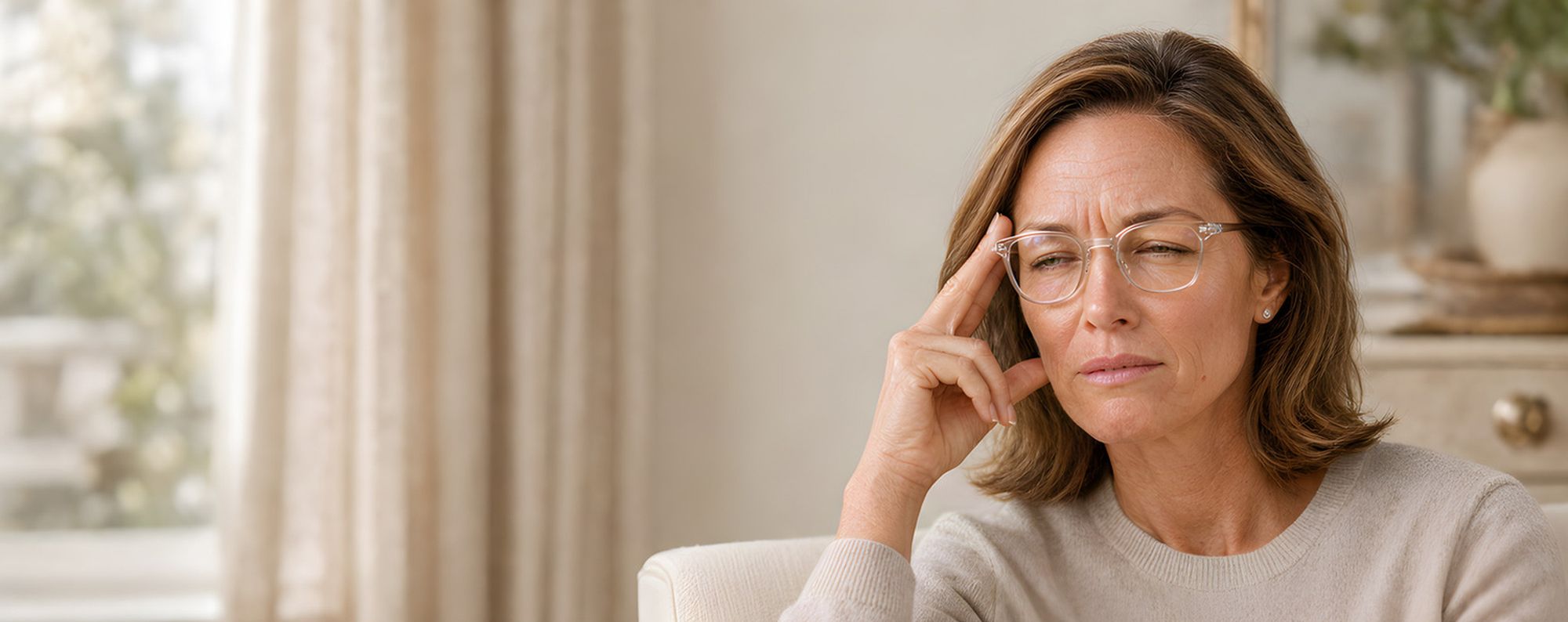
Migraines and Vision Therapy in Rancho Santa Fe
Migraines can bring intense headaches, light sensitivity, nausea and visual disturbances that disrupt daily life. If light, screens or reading make your symptoms worse, an evaluation can show whether a vision problem is adding to the strain.
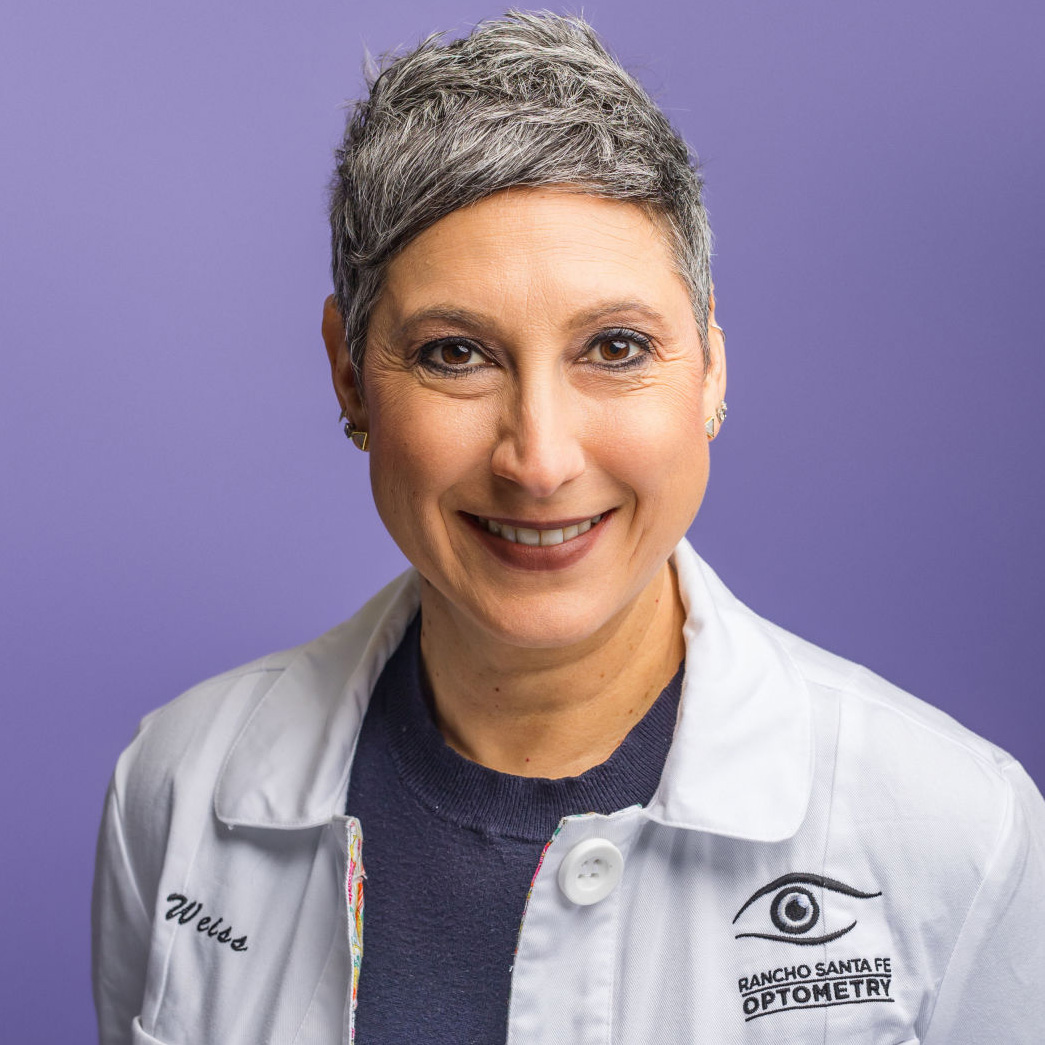 Last reviewed: Dr. Lisa M. Weiss, O.D. | November 2026
Quick Answer
Migraine can bring light sensitivity, visual aura and eye strain. At Rancho Santa Fe Optometry, Dr. Lisa M. Weiss, O.D., F.C.O.V.D., checks how your eyes work together and how you handle light. She may recommend vision therapy for an eye-teaming problem, tinted lenses for light sensitivity, or both. This care complements, and does not replace, migraine treatment from your physician.
Call (858) 756-3210 to schedule an evaluation.
Call 911 or go to the emergency room for a sudden, severe headache, or new weakness, numbness, trouble speaking, sudden vision loss or double vision. Sudden vision changes can be a sign of stroke.
Get prompt medical care for vision changes in only one eye, vision changes without a headache, new or different visual symptoms, or symptoms that start after age 50. This page is educational and is not a diagnosis.
Understanding Migraines and Their Visual Connection
Migraines often involve more than headaches. About 25 to 30 percent of people with migraine have visual aura, such as shimmering zigzag lines or blind spots, and light sensitivity is even more common.
Aura usually affects both eyes and lasts less than an hour. It starts in the brain, not inside the eye. Migraine can also bring blurred vision, difficulty focusing and sensitivity to light, smell and sound. Bright or flickering light, including screens and fluorescent lighting, is a common trigger, and visual symptoms can also follow a concussion or head injury.
Common migraine-related visual challenges include:
- Sensitivity to bright or flickering lights, triggering pain or discomfort
- Difficulty reading or focusing due to eye strain or visual overwhelm
- Dizziness, nausea or a “rocking sensation” tied to visual processing issues
- Brain fog, poor concentration or memory difficulties during episodes
Visual migraine, ocular migraine, and when to get urgent care
“Ocular migraine” is used for two different things. It usually means migraine with aura, which affects vision in both eyes, or, more rarely, retinal migraine, which affects one eye. To check, cover one eye at a time. A typical aura is seen with either eye covered and fades within an hour.
| What you notice | Possible cause | What an eye exam can check | Who to see |
|---|---|---|---|
| Shimmering zigzag lines or sparkles in both eyes that fade within about an hour | Typical migraine visual aura, which starts in the brain | Eye health, to rule out other causes of flashing light | Primary care doctor or neurologist for migraine care |
| Light sensitivity (photophobia), with or without headache | Common in migraine. Dry eye, other eye conditions or nervous system conditions can also cause it | Eye health and tear film. A trial of tinted lenses may be discussed | Optometrist, plus your migraine doctor |
| Eye strain, headache, blur or double vision during reading or screen work | Possible eye-teaming problem, such as convergence insufficiency | Eye teaming, focusing and near vision | Optometrist |
| Constant static, flickering dots or afterimages across your vision | Possible visual snow syndrome. The American Academy of Ophthalmology calls it not dangerous, but its symptoms can resemble other conditions | Eye health, to rule out other conditions | Ophthalmologist or neuro-ophthalmologist |
| New flashes, floaters, a dark curtain, or vision loss in one eye that does not clear Same day |
Possible retinal or vitreous problem | Not a routine visit. Seek same-day evaluation | Ophthalmologist, urgently |
| Sudden one-sided vision loss, tunnel vision, or double vision with dizziness, weakness, numbness or trouble speaking; or a sudden, severe headache Emergency |
Possible stroke or other emergency | Do not wait for an appointment | Call 911 or go to the emergency room |
Who leads migraine care: The American Optometric Association recommends an eye exam to rule out other causes of flashing lights, then care from a primary care doctor for migraine evaluation and treatment. We work alongside that care.
How Vision Therapy Helps
Our vision therapy programs address specific vision problems that can add strain, such as trouble with eye teaming, focusing or tracking. When reading or screen work brings on eye strain or headaches, the goal is more comfortable, efficient vision for close work.
What the research shows, and what it does not
- Eye teaming and headaches: With convergence insufficiency, the eyes work hard to keep single vision up close, which can cause eye strain and headaches.
- Children with convergence insufficiency: A 2021 American Academy of Ophthalmology assessment found office-based therapy improves eye-teaming measures in children. Symptom relief was less consistent, and in young adults therapy was not shown to beat placebo for symptoms.
- Migraine itself: A masked study comparing people with and without migraine found only subtle eye-teaming differences, and its authors advised against binocular vision treatment prescribed on the basis of migraine alone. A 2004 review rated the evidence linking eye-teaming and focusing problems to migraine as poor.
- In plain language: An exam checks for eye-teaming and focusing problems without assuming they cause your migraines. If we find one, treating it can be one part of your care.
What to Expect at Your Migraine Vision Evaluation
- Schedule. Call (858) 756-3210 or request an appointment online.
- Share your history. Tell us about your migraines, current medications, and your physician’s or neurologist’s diagnosis if you have one. A headache diary helps.
- Visual testing. Dr. Weiss tests visual function, for example eye alignment, focusing, tracking and light sensitivity.
- Review your results. You go over the findings together, and whether vision therapy, tinted lenses or both fit your situation.
- Coordinated care. If you start a program, we coordinate with your other providers as needed.
What we evaluate
- Bright or flickering light bothers you: light sensitivity and tint testing
- Reading or screens bring on eye strain or headache: eye teaming, focusing and tracking skills
- Busy visual environments feel overwhelming: visual processing skills such as figure-ground perception
- Dizziness or a rocking sensation: how vision and balance work together. Read more about vision therapy for motion sickness
- Eye health: a comprehensive eye exam checks for other causes of visual symptoms
Light, screens or reading making your migraines harder to manage? Call (858) 756-3210 to schedule an evaluation.
Syntonic Light Therapy
Syntonic phototherapy uses specific colors of light, such as Mu Upsilon, a green-blue hue, and is offered by some optometrists as part of vision care.
Research on it is limited. A 2023 systematic review of eight studies rated all of the evidence as very low certainty and found no consistent evidence that syntonic phototherapy changes visual function. If syntonic light therapy may fit your care, Dr. Weiss will explain what it involves, what the evidence does and does not show, and how it fits with your other treatment. For more on how it fits into our broader program, see neuro-optometric rehabilitation.
How a syntonic program is typically structured
5 weeks, 4 times per week
10 to 20 weeks, alongside vision therapy
5 weeks, followed by at-home maintenance
Program length varies by patient.
Specialty Tinted Lenses for Light Sensitivity
For many people with migraine, light is a major trigger. The American Migraine Foundation reports that 85 to 90 percent of people with migraine have light sensitivity.
Blue light is typically the most bothersome, and green light is the least likely to aggravate migraine. We offer custom-tinted lenses, such as FL-41 or TheraSpecs, designed to filter wavelengths that can aggravate light sensitivity. These lenses are available with or without a prescription, in frames or clip-ons.
Some people with migraine find tinted lenses reduce light sensitivity. Evidence is limited, so we test tints individually.
What the tint research shows
- 1991, 20 children: rose-tinted glasses lowered migraine frequency in a small trial.
- 2002, 17 adults: individually chosen tints gave results the authors called suggestive rather than conclusive.
- 2023, 78 adults: a randomized trial of lenses with engineered tints did not meet its main pain goal; benefit appeared only in later analyses.
- The takeaway: tints may help some people with light sensitivity. They are not a cure, and the right tint varies by person.
Everyday Habits That Support Migraine Care
These habits can complement the care you get from your physician and from our team.
Keep a headache diary
Note the time of day, how strong and how long each headache was, sensitivity to light or sound, what you were doing, sleep, stress, food and drink, and any medicine taken. Bring it to your doctor and to your eye exam.
Rest during an attack
Resting in a quiet, darkened room can ease symptoms during a migraine.
Avoid living in the dark
Staying in darkness long term can increase light sensitivity. Sunglasses outdoors and avoiding flickering lights and glare are better everyday steps.
Take screen breaks
Follow the 20-20-20 rule: every 20 minutes, look at something 20 feet away for 20 seconds.
Ask before supplements
Many supplements are marketed for migraine but have not been thoroughly tested. Talk with your doctor before you take one.
Who Benefits?
An evaluation may help if you have migraine and also notice light sensitivity, eye strain or headaches with reading and screens, or trouble with focusing or eye teaming.
It can also help if visual symptoms started after a concussion or head injury. Children can have migraine too. Very young children may not describe their symptoms, but they might avoid screens or stop playing to lie down in a dark room. A pediatric comprehensive eye exam checks eye health, focusing and eye teaming.
If you have not been diagnosed with migraine, or your headaches have changed, see your primary care doctor or a neurologist as well.
How Rancho Santa Fe Optometry Can Help
At Rancho Santa Fe Optometry, we combine vision therapy, syntonic light therapy and custom-tinted lenses, chosen for the vision problems we find on your evaluation. Your care is personalized, and we coordinate with your physician, neurologist and other providers as needed.
Rancho Santa Fe Optometry provides vision therapy and neuro-optometric care for patients in Rancho Santa Fe and San Diego County. Looking for a local eye doctor? Visit our Rancho Santa Fe eye doctor page.
Rancho Santa Fe Optometry
- 6037 La Granada, Suite A
Rancho Santa Fe, CA 92067
Get directions - (858) 756-3210
- info@rsfoptometry.com · Contact us
- Monday to Friday, 9:00 AM to 5:00 PM
Examination by appointment
Related Reading
Migraine and Vision Therapy FAQs
Does vision therapy treat migraine?
Vision therapy treats specific vision problems, such as convergence insufficiency, that can cause eye strain and headaches. It is not a treatment for migraine itself, and one study advised against binocular vision treatment based on migraine alone. Your physician or neurologist leads migraine treatment.
Is vision therapy a replacement for migraine medication?
No. Vision care complements, and does not replace, treatment from your physician. Do not stop or change any medication without talking to the doctor who prescribed it.
What is the difference between a visual migraine and an “ocular migraine”?
“Ocular migraine” usually means migraine with aura, which affects vision in both eyes, or, rarely, retinal migraine, which affects one eye. Because vision loss in one eye can also signal a serious eye or blood vessel problem, get it checked promptly.
How long does a migraine aura last?
Visual aura usually lasts less than an hour, most often 10 to 30 minutes, according to the American Migraine Foundation. Tell your doctor if your usual pattern changes.
Can migraine affect only one eye?
Retinal migraine can cause temporary vision problems in one eye. One-eye vision loss can also signal a serious eye or blood vessel problem, so get a prompt eye exam and tell your doctor.
Is visual snow the same as migraine aura?
No. Visual snow syndrome involves constant static or flickering vision, while aura comes and goes. The American Academy of Ophthalmology calls visual snow not dangerous, but its symptoms resemble some serious eye conditions, so see an eye doctor for an accurate diagnosis.
Do tinted lenses or FL-41 glasses help migraines?
They may help some people with light sensitivity, but the evidence is limited and based on small studies. Dr. Weiss can advise whether a tint trial fits you.
Can an eye exam find the cause of my migraines?
An eye exam can check for eye conditions and visual factors that may add to your symptoms and rule out other causes of visual changes. Diagnosing migraine is your physician’s role.
What can I do during a migraine to ease light sensitivity?
Resting in a quiet, dark room can help during an attack. Between attacks, avoid living in darkness, which can increase sensitivity; sunglasses outdoors and avoiding flicker and glare are better everyday steps.
Can screens or fluorescent lighting trigger migraines?
Many people with migraine name bright or flickering light, including fluorescent lighting, as a trigger. For screen-related eye strain, the 20-20-20 rule helps: every 20 minutes, look 20 feet away for 20 seconds.
Can children have migraine-related vision symptoms?
Yes. Migraine happens in children and adults. Young children might refuse screens or stop playing to lie down in a dark room. A pediatric eye exam can check eye health and focusing.
How do I schedule a migraine vision evaluation?
Call (858) 756-3210 or request an appointment online. Our office is open Monday to Friday, 9:00 AM to 5:00 PM.
Take the First Step Toward Migraine Relief
Don’t let migraines dim your quality of life. Schedule a comprehensive evaluation with Rancho Santa Fe Optometry to find out whether a vision problem is adding to your symptoms.
Contact us at (858) 756-3210 or request an appointment online. An online request is a request for follow-up; our team will contact you to confirm a time.
Dr. Weiss graduated from Pacific University College of Optometry, then completed a residency in Vision Therapy and Rehabilitation at the SUNY State College of Optometry in New York. She earned her fellowship in the College of Optometrists in Vision Development and is a Diplomate of the American Board of Optometry. She is a member of the Neuro-Optometric Rehabilitation Association and the College of Syntonic Optometry. Meet Dr. Weiss
Sources
- American Optometric Association: Migraine with aura.
- American Migraine Foundation. Migraine in the Emergency Department: When to Go.
- American Migraine Foundation. Understanding Migraine With Aura.
- Mayo Clinic. Ocular migraine: When to seek help.
- American Migraine Foundation. Photophobia (Light Sensitivity) and Migraine.
- National Institute of Neurological Disorders and Stroke: Migraine.
- Cleveland Clinic: Ocular Migraine.
- American Optometric Association: Ocular migraine.
- American Optometric Association: Convergence insufficiency.
- American Academy of Ophthalmology. What Is Visual Snow Syndrome? 2026.
- National Eye Institute. Retinal Detachment.
- American Optometric Association: Computer vision syndrome.
- American Academy of Ophthalmology. Home- and office-based vergence and accommodative therapies for treatment of convergence insufficiency in children and young adults. Ophthalmology. 2021.
- Subtle binocular vision anomalies in migraine. Ophthalmic Physiol Opt. 2006.
- The optometric correlates of migraine. Ophthalmic Physiol Opt. 2004.
- Cervera-Sánchez Z, et al. Efficacy of optometric phototherapy: a systematic review. J Optom. 2023.
- The use of tinted glasses in childhood migraine. Headache. 1991.
- Tinted spectacles and visually sensitive migraine. Cephalalgia. 2002.
- Targeting the intrinsically photosensitive retinal ganglion cell to reduce headache pain and light sensitivity in migraine: a randomized double-blind trial. J Clin Neurosci. 2023.