

Vision Therapy After Stroke in Rancho Santa Fe
A stroke can change how you see, with blurred vision, visual field loss, trouble with eye movements or difficulty making sense of what you see. These changes can affect balance, coordination and moving safely through your day.
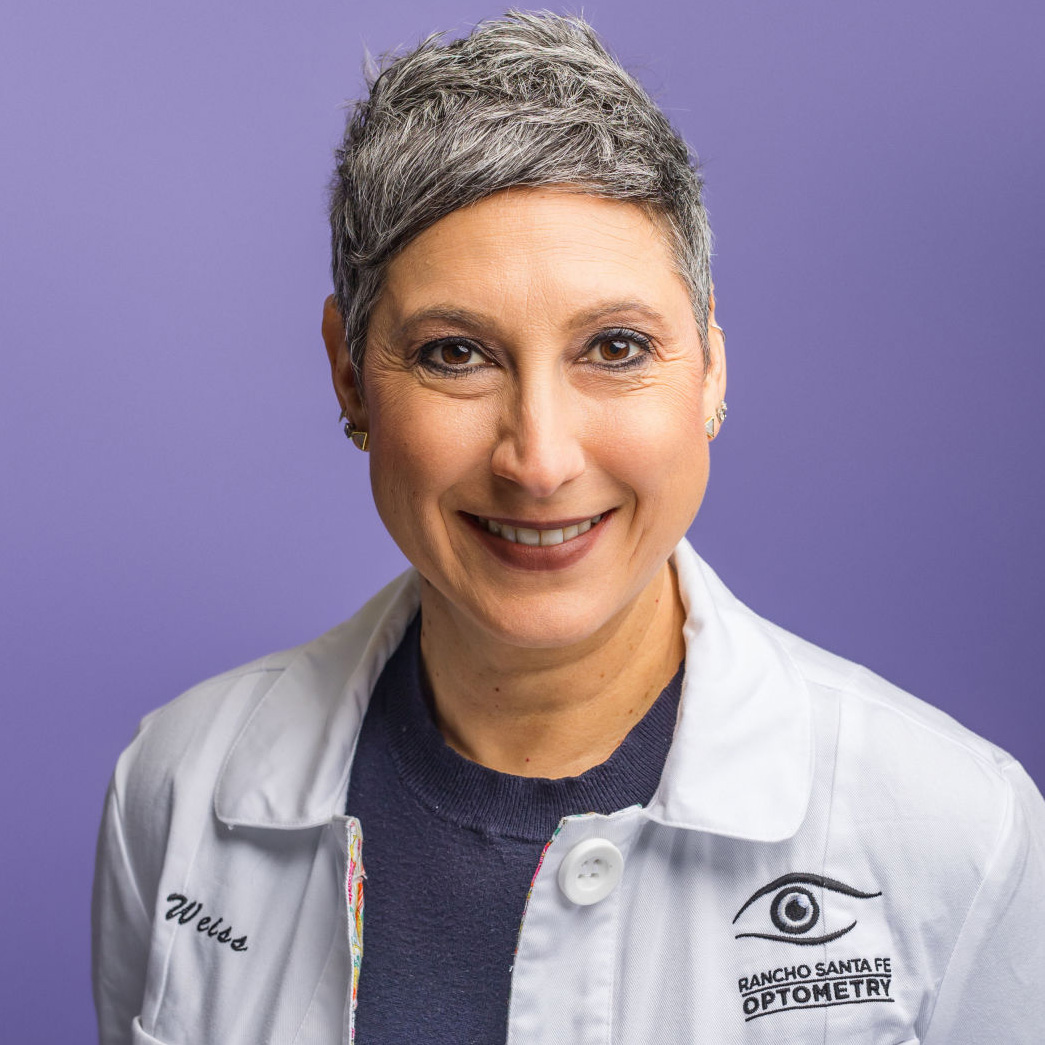 Last reviewed: Dr. Lisa M. Weiss, O.D. | November 2026
Quick Answer
A stroke can cause double vision, blind spots or visual field loss, and trouble tracking or scanning. About 30 percent of stroke survivors have visual field loss, according to the American Stroke Association. At Rancho Santa Fe Optometry, Dr. Lisa M. Weiss, O.D., F.C.O.V.D., evaluates visual function and may recommend vision rehabilitation alongside your stroke care team.
Call (858) 756-3210 to schedule an evaluation.
The American Stroke Association’s B.E. F.A.S.T. warning signs:
- Balance: sudden loss of balance or coordination
- Eyes: sudden blurred vision, double vision, or loss of sight in one or both eyes
- Face: one side of the face droops or is numb
- Arms: one arm is weak or numb
- Speech: slurred or hard to understand
- Time to call 911 right away. Note when symptoms began, and do not wait to see if they pass.
This page is educational and is not a diagnosis or emergency care.
Understanding the Visual Effects of a Stroke
When a stroke occurs, blood flow to part of the brain is interrupted or reduced, so brain tissue does not get the oxygen and nutrients it needs. Because the brain controls and processes vision, a stroke can lead to a range of visual disturbances.
Vision is more than sharp eyesight. Many stroke survivors report trouble with visual memory, balance, depth perception and reading. Common visual effects include:
- Partial vision loss or blind spots
- Double vision (diplopia)
- Visual field loss, such as hemianopia, the loss of the left or right half of what you see
- Eye movement disorders that make it hard to track moving objects or shift your gaze smoothly
- Visual perceptual problems that affect how you interpret what you see
These challenges can deeply affect independence, safety and quality of life. For a fuller explanation, read how a stroke can affect your vision.
Vision problems after stroke and what an evaluation checks
What each problem can look like, what an eye evaluation can check, and how strong the evidence is for common approaches. Results vary from person to person.
| Problem after stroke | What it can look like | What an evaluation can check | Common approaches and evidence |
|---|---|---|---|
| Visual field loss (hemianopia, quadrantanopia, blind spots) | Bumping into things on one side, missing words on one side of a page, trouble recognizing people or objects | Visual field testing, or referral for formal testing | Scanning training may improve scanning, reading and daily function, but does not shrink the field loss. Yoked prisms may help some people compensate. Evidence that training restores the lost field is lacking. |
| Double vision (diplopia) or misaligned eyes | Seeing two of one object, loss of depth perception | Eye alignment and eye movements | An eye patch or prism glasses can help, though patching does not fix the whole problem. Research on treatments for eye movement disorders after brain injury is limited. Eye exercises are recommended for convergence insufficiency. |
| Eye movement (oculomotor) problems | Eyes cannot track or move smoothly between objects; reading and walking can be affected | Tracking, eye jumps between targets (saccades) and eye teaming | Scanning training may be considered. Evidence for other approaches is limited. |
| Visual neglect (spatial inattention) | Not noticing things on the stroke-affected side, such as food on one side of a plate | Spatial attention screening. Neglect comes from the brain, not the eyes | Rehabilitation trains scanning from side to side. A 2021 Cochrane review could not support or rule out any specific approach. |
| Visual midline shift | The floor or walls look tilted, and your body tilts to compensate | Spatial perception and balance | Balance activities and yoked prism glasses are used by therapists. |
| Dry or irritated eyes | Trouble blinking or fully closing the eyes, with burning, irritation or blur | Eye surface health | Managed as an eye health problem. |
How common: The American Stroke Association reports that about 30 percent of survivors have visual field loss. A 2019 Cochrane review estimates visual field defects affect 20 to 57 percent of people after stroke. The figures differ because the studies measured different groups.
How Vision Therapy Can Assist Stroke Survivors
Vision therapy, sometimes called visual rehabilitation, can be part of care after a stroke. It uses a series of customized activities, and sometimes prisms or other lenses, chosen for the problems found on your evaluation. It is part of our neuro-optometric rehabilitation care.
What the research says
- Scanning training: The 2025 European Stroke Organisation guideline recommends scanning training to help people adapt to visual field loss. The 2016 AHA/ASA guideline says it may improve scanning, reading and daily function, but it does not reduce the field loss itself.
- Restoring lost vision: A 2019 Cochrane review of 20 studies found insufficient evidence that training restores the visual field.
- Prisms: Yoked prisms may help people compensate for a field cut. Cochrane found the evidence insufficient and noted minor side effects, mainly headache.
- Eye exercises: The AHA/ASA guideline recommends eye exercises for convergence insufficiency. It does not recommend general eye exercises, lenses or colored filters to improve eye movement control, focusing and coordination, citing a lack of controlled trials.
- In plain language: Scanning training is recommended for field loss, though the research behind it is limited. Prisms and patching are established ways to ease double vision symptoms. Evidence for other eye-movement treatments is limited, and many other approaches have little research yet, so we explain what is known before you start.
What to Expect at Your Post-Stroke Vision Evaluation
- Schedule. Call (858) 756-3210 or request an appointment online. If symptoms are new or sudden, call 911 first.
- Share your history. Bring your stroke history, imaging or discharge summary if you have it, and the names of your current therapists. A family member or caregiver is welcome to help.
- Visual testing. Dr. Weiss evaluates visual function, for example eye alignment, eye movements, visual fields and visual processing.
- Review your options. You go over the findings together. Options may include prisms, scanning practice or in-office vision therapy.
- Coordinated care. We coordinate with your physical, occupational and other therapists as appropriate.
What an evaluation can check
- Two images of one object: eye alignment and eye movement
- Bumping into things or missing words on one side: visual field screening, or referral for formal testing
- Eyes do not follow a moving object or jump around a page: eye movement control, reading and scanning
- Things look “off,” or space and faces are hard to judge: visual processing, with referral to your stroke care team as needed
- Eye health: a comprehensive eye exam checks for other causes of vision changes
When to start
Some vision recovery can happen on its own, and gains tend to be greatest early. A UK practice statement from the British and Irish Orthoptic Society notes that most improvement in field loss happens by 3 to 6 months and most double-vision recovery by about 6 months, and that field-loss rehabilitation should start early. Ask your stroke team when you are ready for an eye evaluation.
Noticing vision changes after a stroke? Call (858) 756-3210 to schedule a post-stroke vision evaluation.
A Collaborative Approach to Care
Stroke recovery often takes the expertise of several health professionals. At Rancho Santa Fe Optometry, we work with our occupational and physical therapy partners and coordinate with your stroke care team, so vision care fits into the rest of your rehabilitation.
Why vision matters to other therapies
The American Stroke Association notes that rehabilitating vision can have a big impact on physical, occupational and speech therapy.
Neuro-optometric rehabilitation
An individualized treatment plan for vision problems after brain injury, stroke and other neurological conditions. It can include therapeutic lenses, prisms and other rehabilitation strategies.
Your stroke vision team
Ophthalmologists and optometrists can diagnose vision problems after a stroke, and rehabilitation is likely to take place in an optometric practice.
Post-Stroke Vision Care in Rancho Santa Fe
Rancho Santa Fe Optometry provides vision therapy and neuro-optometric care for patients in Rancho Santa Fe and San Diego County. Our dedicated team is committed to providing the support and specialized care needed to address vision problems after a stroke.
Looking for a local eye doctor? Visit our Rancho Santa Fe eye doctor page.
Rancho Santa Fe Optometry
- 6037 La Granada, Suite A
Rancho Santa Fe, CA 92067
Get directions - (858) 756-3210
- info@rsfoptometry.com · Contact us
- Monday to Friday, 9:00 AM to 5:00 PM
Examination by appointment
Related Reading
Stroke and Vision FAQs
Are sudden vision changes an emergency?
Yes. Sudden blurred vision, double vision, or loss of sight in one or both eyes can be a stroke warning sign. Call 911 right away. Do not wait for an eye appointment or for the symptoms to pass.
How common are vision problems after a stroke?
Common. The American Stroke Association reports that about 30 percent of survivors have visual field loss, and a Cochrane review estimates field defects affect 20 to 57 percent of people after stroke.
Can vision therapy restore my lost field of vision?
Research has not shown that training restores lost visual field. What helps most is learning to compensate: scanning training can make reading, moving around and daily tasks easier, and prisms may help some people.
Will my vision come back on its own?
Some recovery can happen, and gains tend to be greatest in the first weeks and months. How much varies widely between people, and many people do not fully regain vision.
What can help with double vision after a stroke?
Options include prism glasses, covering one eye (occlusion) or adjusting head posture. A patch reduces double vision but does not fix the underlying problem. Dr. Weiss will explain which options fit your evaluation.
What is scanning training?
Scanning training teaches you to search toward areas of vision loss. Guidelines say it may improve scanning, reading and daily function after field loss, although it does not shrink the field loss itself.
Can a stroke change how I read?
Yes. Field loss and eye movement problems often make reading harder. With a field cut, therapy may use a line guide or a device that isolates lines of text, and scanning is a large part of rehabilitation.
Can a stroke cause dry eyes?
Yes. Some survivors have trouble blinking or fully closing their eyes, so the eyes do not stay moist. This can cause irritation, burning or blurry vision.
How is neuro-optometric rehabilitation different from regular vision therapy?
Neuro-optometric rehabilitation focuses on vision problems acquired from a brain injury, stroke or other neurological condition. Vision therapy more often treats developmental problems, such as eye-teaming issues in children.
How is vision after a stroke different from vision after a concussion?
Both can affect vision, but the cause differs. A stroke stops or reduces blood flow to part of the brain, so vision loss can follow a pattern such as one half of the visual field. See our concussion vision therapy page for head injury.
How do I schedule a post-stroke vision evaluation?
Call (858) 756-3210 or request an appointment online. Our office is open Monday to Friday, 9:00 AM to 5:00 PM.
Take Action to Improve Vision After Stroke
If you think you or a loved one may have vision problems from a stroke, an evaluation with an eye doctor who specializes in vision rehabilitation is an important next step.
Contact Rancho Santa Fe Optometry at (858) 756-3210 to learn how our vision therapy program may help. An online request is a request for follow-up; our team will contact you to confirm a time.
Dr. Weiss graduated from Pacific University College of Optometry, then completed a residency in Vision Therapy and Rehabilitation at the SUNY State College of Optometry in New York. She earned her fellowship in the College of Optometrists in Vision Development and is a Diplomate of the American Board of Optometry. She is a member of the Neuro-Optometric Rehabilitation Association and the College of Syntonic Optometry. Meet Dr. Weiss
Sources
- American Stroke Association. Stroke Symptoms and Warning Signs (B.E. F.A.S.T.).
- American Stroke Association. Visual Disturbances. Last reviewed 2024.
- American Stroke Association. Let’s Talk About Stroke and Vision Changes.
- Winstein CJ, et al. Guidelines for Adult Stroke Rehabilitation and Recovery. American Heart Association/American Stroke Association. Stroke. 2016.
- Pollock A, et al. Interventions for visual field defects in people with stroke. Cochrane Database Syst Rev. 2019.
- Rowe FJ, et al. Interventions for eye movement disorders due to acquired brain injury. Cochrane Database Syst Rev. 2018.
- Longley V, et al. Non-pharmacological interventions for spatial neglect or inattention following stroke and other non-progressive brain injury. Cochrane Database Syst Rev. 2021.
- European Stroke Organisation. Guideline on visual impairment in stroke. 2025.
- British and Irish Orthoptic Society (UK). Position Statement for Vision Services in Stroke Practice. 2021.
- Neuro-Optometric Rehabilitation Association. What is Neuro-Optometric Rehabilitation?