
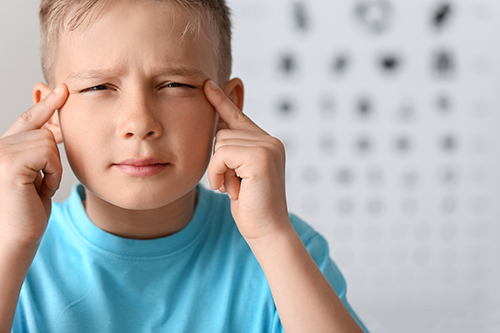
For many parents in North County San Diego, the annual pediatric eye exam has become a source of anxiety. Each year, the prescription gets stronger, the glasses get thicker, and the concern for their child’s long-term eye health grows. This cycle is more than just a need for new lenses; it is the progression of myopia. At Rancho Santa Fe Optometry, we view vision as much more than 20/20 sight. It is a complex brain-eye connection that dictates how a child interacts with their world, learns in the classroom, and performs on the field. The global rise of children who are nearsighted has reached epidemic proportions. Projections suggest that by 2050, half of the world’s population will be myopic. However, we are no longer limited to simply “correcting” the blur. With our introduction of Advanced Myopia Management, we now have the tools to treat the root cause of visual dysfunction and significantly slow the progression of this condition. One of the most significant breakthroughs in this field is the Essilor Stellest® lens, a technology designed to harmonize with the way the brain processes visual signals to protect a child’s sight.
The Science of the Brain-Eye Connection in Myopia
To understand why a child becomes nearsighted, we must look beyond the eyeball. While myopia is physically characterized by the eye growing too long (axial elongation), the trigger for this growth is often rooted in how the brain interprets light. In a standard eye, light focuses directly on the retina. In a myopic eye, light focuses in front of the retina. Traditional glasses correct this by moving the light back to the retina, allowing for clear central vision. However, these standard lenses often cause light in the periphery to focus behind the retina. The brain perceives this peripheral “hyperopic defocus” as a signal that the eye is too short, prompting the eye to grow longer to reach that light. This creates a feedback loop that causes the prescription to worsen year after year. At RSF Optometry, our specialists in neuro-optometry emphasize that treating the eye requires addressing these neurological signals. We do not just want to help your child see; we want to provide pediatric eye care that manages the biological drive for the eye to change shape.
Enter Essilor Stellest: A New Standard in Myopia Management
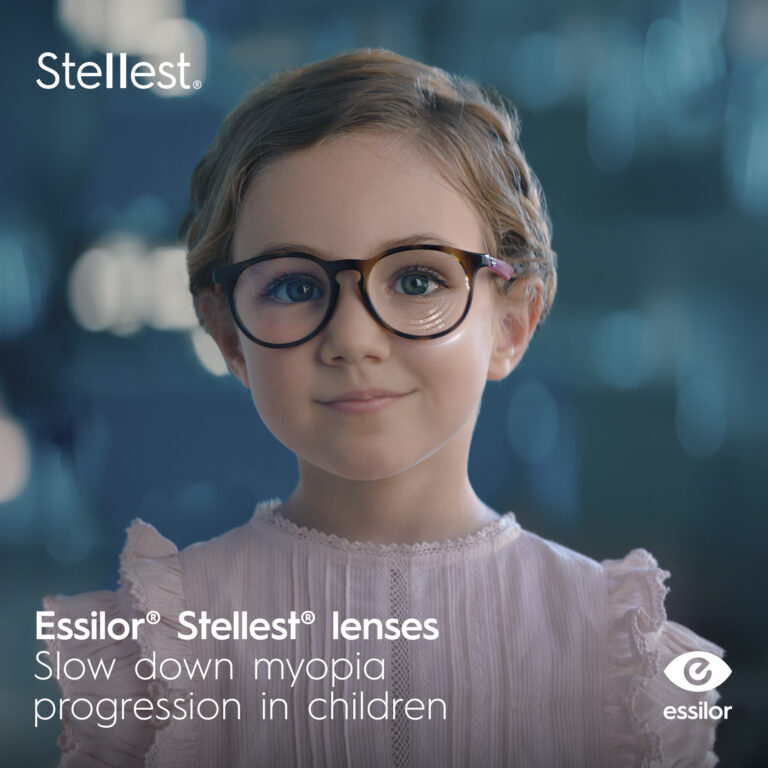
The Essilor Stellest lens represents a paradigm shift in myopia management. Unlike traditional lenses, Stellest uses “H.A.L.T.” technology (Highly Aspherical Lenslet Target). This consists of a constellation of nearly invisible lenslets that create a volume of light signal in front of the retina. This signal acts as a “stop” command to the brain, effectively slowing down the signal that tells the eye to grow longer. With the anticipated 2025 FDA authorization bringing these specialized lenses more broadly to the U.S. market, we are excited to integrate this technology into our comprehensive treatment plans. Research has shown that when worn for 12 hours a day, these lenses can slow myopia progression by more than 60% on average compared to single-vision lenses. This is not just a cosmetic improvement; it is a vital intervention for pediatric eye care. Our specialized program for myopia management integrates state-of-the-art diagnostic tools with personalized rehabilitation strategies. By measuring the physical length of the eye and monitoring changes over time, we can implement interventions like the Essilor Stellest lenses that are designed to offer significant symptom reduction and long-term health benefits.
The RSF Optometry Approach: Beyond the Prescription
When a family visits Rancho Santa Fe Optometry, they experience a clinical yet compassionate approach that treats the whole patient. Our Advanced Myopia Management program is broken down into three intentional phases:
Phase 1: Prime and Diagnose
We begin with a comprehensive pediatric eye exam that goes far beyond reading letters on a chart. We utilize Optos technology for wide-field retinal imaging and iWellness scans to establish a baseline of your child’s ocular health. We also assess binocularity—how the two eyes team together—because many children who are nearsighted also struggle with eye-teaming issues that can worsen their condition.
Phase 2: Treat and Implement
Once we understand the unique neurological and anatomical profile of your child’s eyes, we prescribe a personalized program of neuro-optometric rehabilitation. This may include Essilor Stellest glasses, specialized contact lenses, or Syntonic Light Therapy to balance the visual system. Our goal in this phase is to provide the “stop” signal to the eye’s growth while ensuring the brain is processing visual information efficiently.
Phase 3: Revitalize and Monitor
Advanced Myopia Management is a journey, not a one-time fix. We provide ongoing care to ensure the treatment is effective and that the child’s quality of life is improving. This involves regular check-ups in our Rancho Santa Fe office to monitor axial length and ensure that their myopia management plan is evolving with their needs.
Why Proactive Pediatric Eye Care Matters
Many parents ask why we cannot simply wait until a child is older to start myopia management. The answer lies in the long-term risks associated with high myopia. As the eye elongates, the tissues of the retina are stretched thin. This increases the risk of serious conditions later in life, such as retinal detachment, glaucoma, and macular degeneration. By intervening early with a specialized pediatric eye exam, we are not just reducing the strength of their glasses; we are protecting their future. When we reduce the progression of myopia, we are significantly lowering the risk of vision loss in adulthood. This is the heart of why we do what we do at RSF Optometry: we provide life-changing care that extends far beyond the exam room. Furthermore, children who struggle with their vision often face challenges in school that are misdiagnosed as learning disabilities. A child who is nearsighted or struggling with Binocular Vision Dysfunction (BVD) may experience headaches, fatigue, and a lack of focus. By optimizing the brain-eye connection, we can help these students regain their confidence and improve their academic performance.
Your Partner in Vision Health
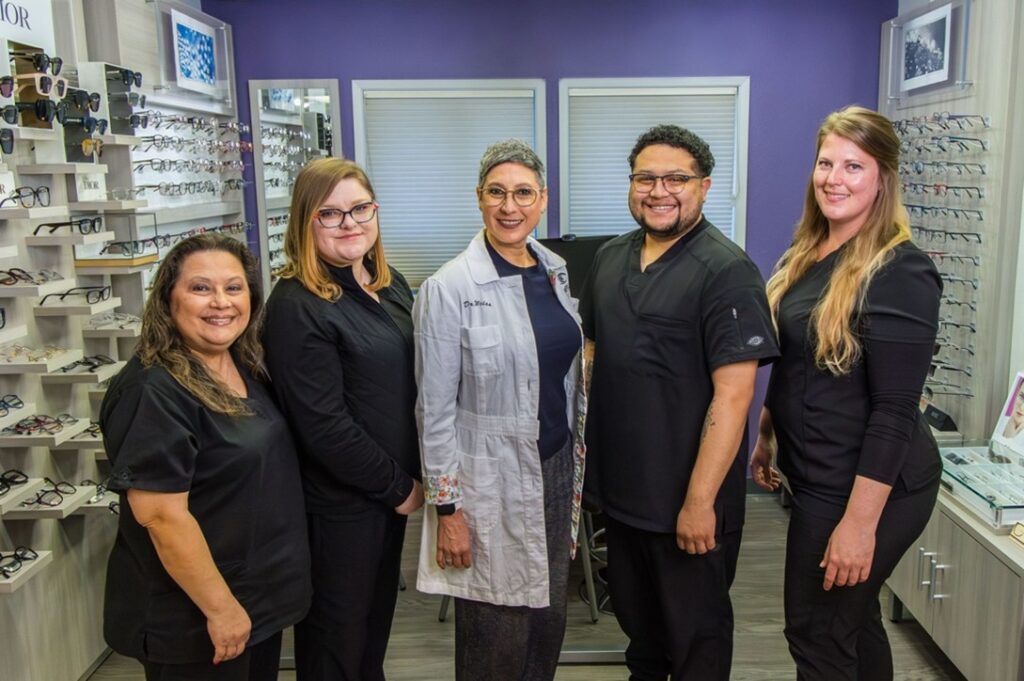
We understand that your child’s vision is their primary gateway to learning and experiencing the world. Our holistic approach ensures that we are treating the root cause of visual issues, offering relief and a better quality of life. Is your child’s prescription changing every year? Do they struggle with fatigue after reading or digital use? It may be time for a comprehensive pediatric eye exam. Request an appointment or call (858) 756-3210 to speak with our team about your child’s needs. Don’t wait for your child’s vision to worsen—let us help you protect their sight and enhance their quality of life with our Advanced Myopia Management program.

At Rancho Santa Fe Optometry we offer comprehensive eye examinations for all ages. With a focus on children’s vision and vision therapy, our doctors test for visual acuity, visual efficiency skills and visual information processing starting in early infancy. The practice also provides diagnosis, treatment and management of diseases that affect the human eye and visual system, including dry eye syndrome, diabetic retinopathy, cataracts, macular degeneration and keratoconus.
