

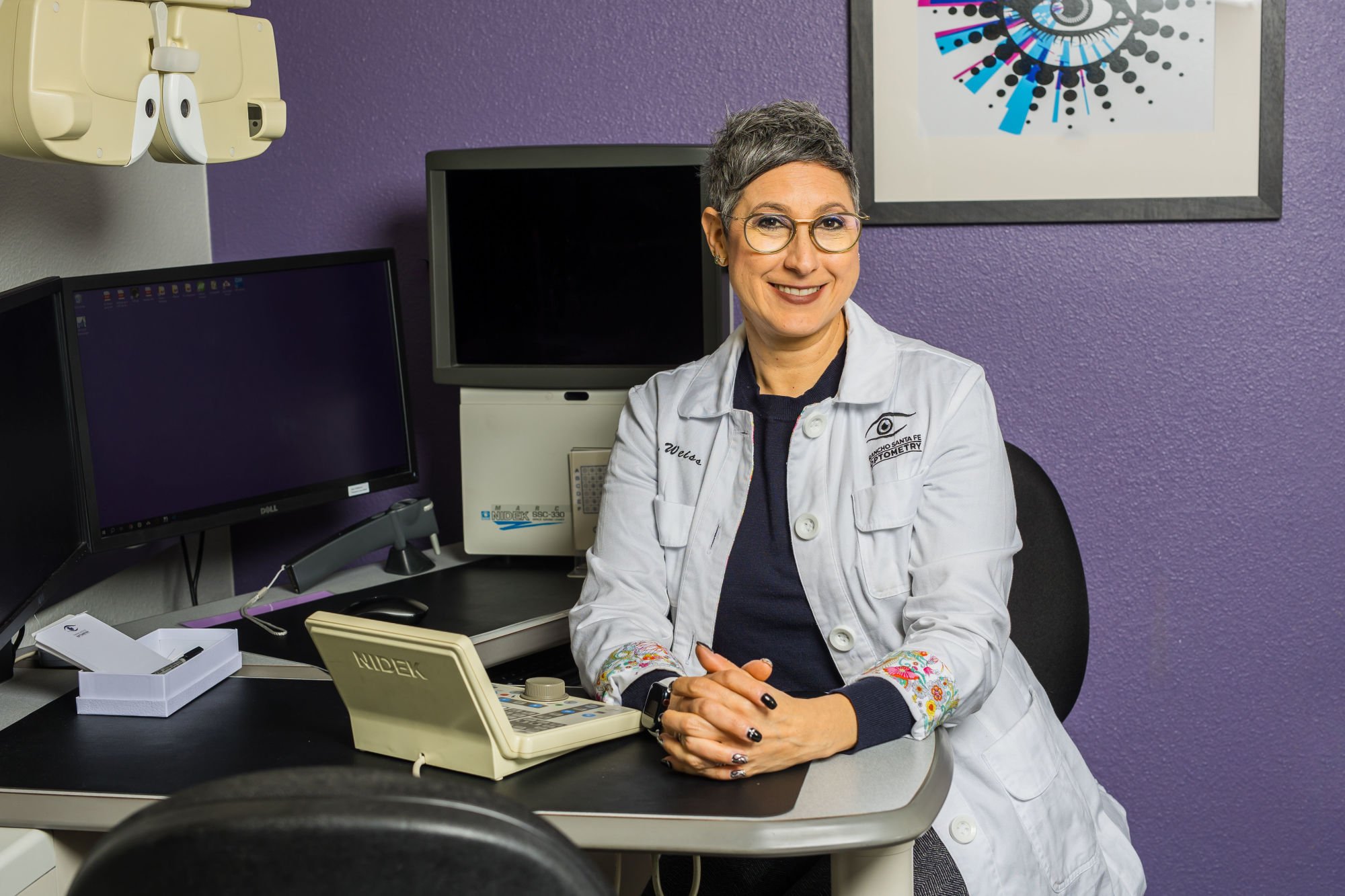
Medically reviewed by Dr. Lisa M. Weiss, O.D., F.C.O.V.D., Diplomate American Board of Optometry | Last reviewed: October 2026
Convergence insufficiency (CI) makes it difficult for the eyes to turn inward together during reading and other close work. It can cause eye strain, headaches, blurry or double vision, and difficulty keeping your place on the page. Even someone with 20/20 vision can have CI because seeing clearly and coordinating the eyes are different skills.
You might notice your child rubbing their eyes halfway through homework, or find that an afternoon of screens and paperwork leaves your own eyes tired and your head aching. If close work remains uncomfortable even with the right glasses, an evaluation can help determine whether CI is the cause. This guide explains the symptoms, the tests used to diagnose CI, and the treatment options for children and adults.
What Is Convergence Insufficiency?
When you look at something up close, like a book or a phone, both eyes turn slightly inward so they stay aimed at the same point. That inward movement is called convergence. With convergence insufficiency, the eyes don’t converge enough for near vision, and one or both eyes may drift outward during close work (American Academy of Ophthalmology).
According to the National Eye Institute (NEI), CI happens when the nerves that control the eye muscles don’t work the right way. In many cases, doctors don’t know exactly what causes it.
Convergence insufficiency vs. nearsightedness and farsightedness
Nearsightedness, farsightedness and astigmatism affect how clearly the eyes focus. CI affects how well they work together. A person can have both, and correcting a refractive error does not necessarily address CI. Routine vision checks and school screenings may miss it if they do not include tests of eye teaming.
Who it affects
Anyone can develop CI, but it is most common in children and young adults. It can also appear at any age after a brain injury such as a concussion.
Convergence Insufficiency Symptoms

Symptoms usually appear during reading, screen use or other close work. They vary from person to person and may include:
- Tired, sore or strained eyes, sometimes with headaches
- Blurry or double vision, or words that seem to move, jump or float
- Slow reading, losing your place, trouble concentrating or difficulty remembering what you just read
- Squinting, rubbing the eyes, or closing or covering one eye
- Sleepiness while reading
These symptoms reflect the effort of keeping the eyes working together. CI is not a learning disability, although the two can occur together. The American Academy of Ophthalmology (AAO) notes that learning disabilities are not caused by eye problems.
What parents may notice in children
Parents and teachers may notice a child rubbing their eyes, squinting or closing one eye while reading. Homework may take longer, and the child may struggle to stay with a close task. These behaviors can be mistaken for reading or attention difficulties, so describing them to an eye doctor can help identify whether a vision problem is contributing.
What adults often notice
Adults may notice eye strain, headaches, blur or double vision while reading or working at a computer. When these symptoms repeatedly interrupt everyday tasks, an eye-teaming evaluation can help clarify the cause.
If symptoms keep returning, ask an eye doctor to check eye teaming. Describe symptoms in detail because a routine exam may not include the specific tests needed to identify CI.
How Is Convergence Insufficiency Diagnosed?
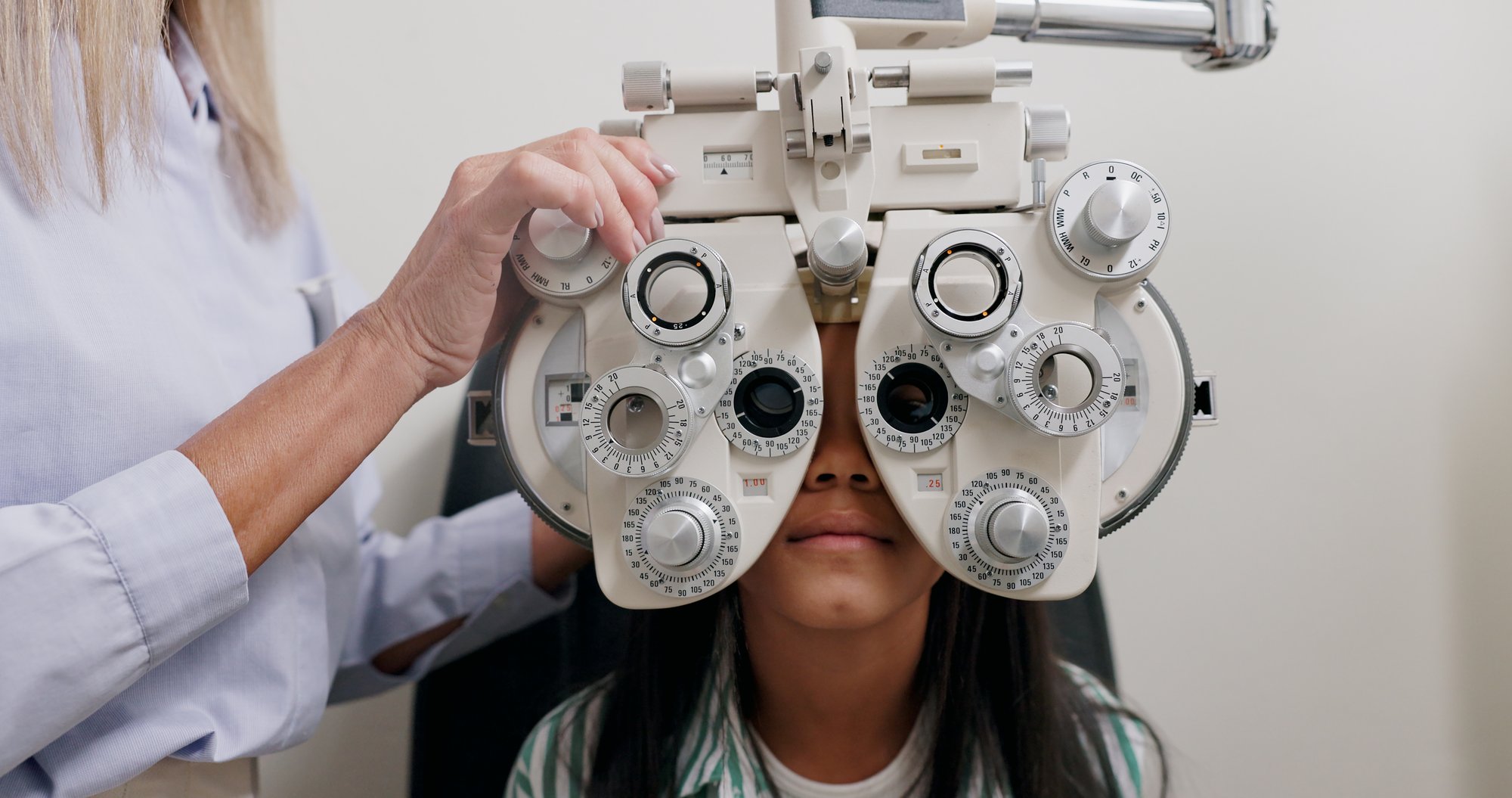
Diagnosing CI requires more than reading an eye chart. An optometrist, ophthalmologist or orthoptist reviews your symptoms and measures how well your eyes work together at close range. The evaluation begins with questions about reading, screen use and other tasks that cause discomfort. The doctor may use the 15-item Convergence Insufficiency Symptom Survey (CISS) to assess symptoms. The examination also checks for nearsightedness, farsightedness or astigmatism.
To measure the near point of convergence, the doctor brings a target toward your face and checks how close it can get before you see double or an eye drifts outward. A fusional vergence test uses special lenses to measure how well your eyes can maintain a single image as the demand to turn inward increases. The doctor also checks eye alignment at distance and near, along with the ability to switch focus between near and far. These focusing tests help identify weaknesses that may accompany CI. Your doctor considers the measurements alongside your symptoms. If distraction affects the results, some tests may need to be repeated.
At Rancho Santa Fe Optometry, you can request a binocular vision evaluation or vision therapy evaluation for an initial diagnosis and treatment plan. The evaluation includes a full 21-point binocular exam, including stereo depth perception, near point of convergence, cover testing and vergence ranges at both distance and near.
Convergence Insufficiency Treatment Options
Treatment depends on your symptoms and test results. Your eye doctor will recommend an approach suited to your needs; not everyone with signs of CI needs exercises or other treatment. The table below compares the main options.
| Option | What it involves | What the research shows |
|---|---|---|
| Office-based vergence/accommodative therapy with home reinforcement | Weekly in-office sessions plus home exercises | In children ages 9 to 17, the most effective option studied: better than home pencil push-ups, home computer therapy and placebo therapy. In adults, the evidence is less clear. |
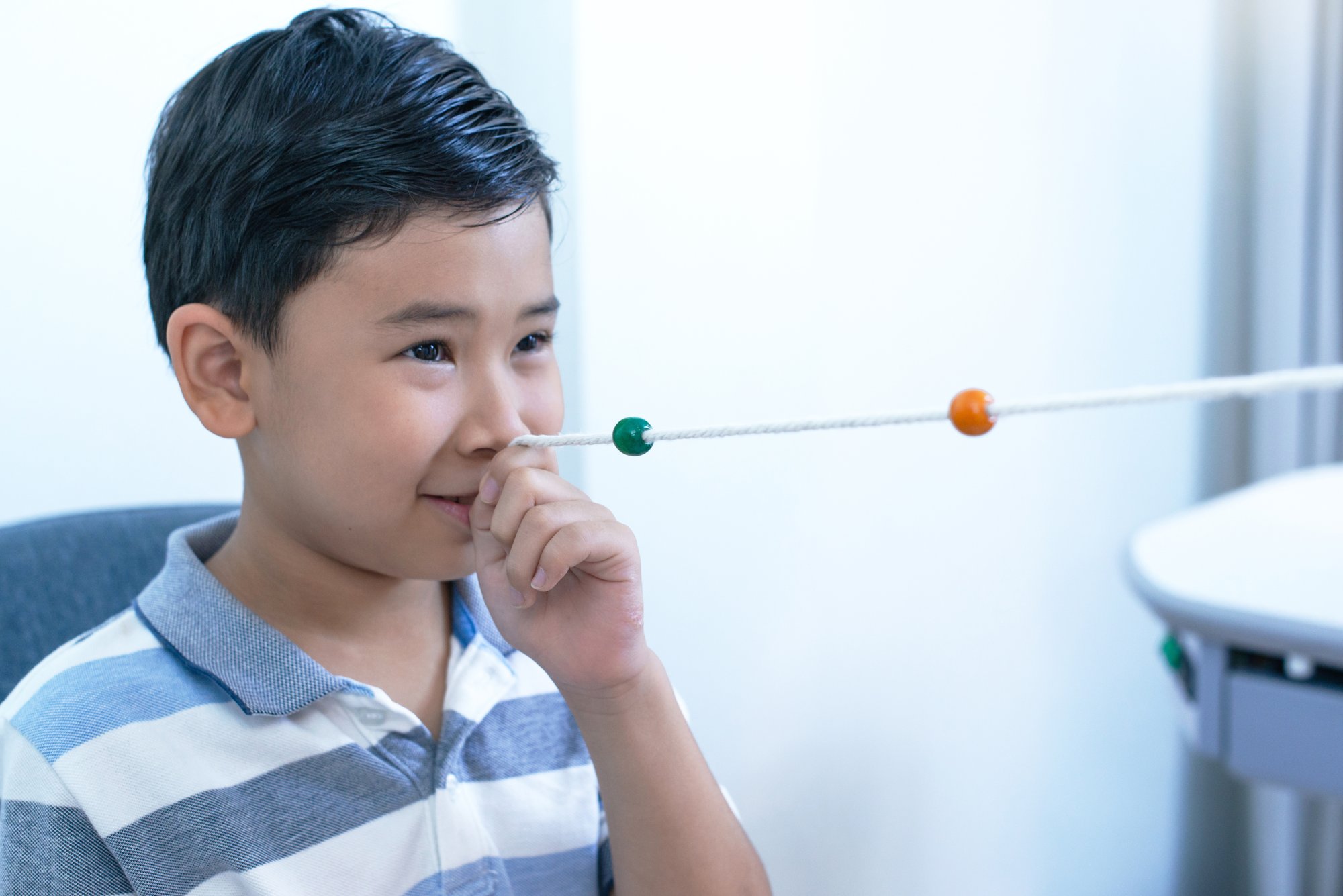
| Home-based pencil push-ups | Moving a small target toward the nose while keeping it single | Performed no better than placebo therapy for symptoms in the CITT trial in children. |
| Home-based computer vergence/accommodative therapy | Software-guided eye-teaming exercises at home | Performed no better than placebo therapy for symptoms in the CITT trial in children. |
| Base-in prism reading glasses | Reading glasses with prism built into the lenses | No more effective than placebo reading glasses in a CITT trial in children. |
| Surgery | Eye muscle surgery | Used only in rare cases. |
| Monitoring | Follow-up for people with CI signs but no symptoms | Treatment generally isn’t needed without symptoms, but these patients should be followed and should tell their doctor if symptoms appear. |
Sources: Convergence Insufficiency Treatment Trial, Cochrane, CITT prism trial, AAO, NEI, AAPOS.
What the CITT research found
The strongest research on CI treatment supports office-based vision therapy. In the NEI-supported Convergence Insufficiency Treatment Trial (published in Archives of Ophthalmology in 2008), 221 children ages 9 to 17 were randomly assigned to one of four 12-week treatments. Office-based vision therapy with home reinforcement improved symptoms and eye-teaming measures more than any other option, including home pencil push-ups and placebo. A 2020 Cochrane review reached the same conclusion for children: office-based vision therapy outperforms home exercises alone.
Reading breaks may ease eye strain temporarily. Vision therapy addresses the coordination skills that help both eyes stay aimed at the same point during close work. Therapy for CI targets eye teaming. It does not treat learning disabilities, even when a child has both conditions.
What to Expect If Vision Therapy Is Recommended
For an introduction, read What Is Vision Therapy? How It Works and Who It Helps. If therapy is recommended for CI, your doctor will use initial symptom scores and eye-teaming measurements to establish treatment goals. Treatment may combine in-office sessions with prescribed home exercises to reinforce the skills practiced during visits, as it did in the Convergence Insufficiency Treatment Trial (CITT).
Both types of assessment matter because symptom improvement doesn’t always correspond to changes in eye coordination. The CITT measured treatment success using symptom scores and clinical convergence tests. In the later CITT-ART trial, eye-teaming measurements improved more with therapy than with placebo, while symptom scores improved by similar amounts in both groups. These findings highlight the importance of evaluating both reported symptoms and clinical measures of eye coordination (NIH). Improvement can take time, and the National Eye Institute notes that it may take 12 weeks or longer to notice changes.
Convergence Insufficiency in Children and Adults
For children, CI may make homework and reading uncomfortable. Adults may notice the same difficulties with screens and office documents. Treatment decisions also need to account for differences in the research: the strongest evidence for office-based therapy comes from studies of children ages 9 to 17, while evidence in adults is less clear (Cochrane).
Read more in Vision Therapy for Children: A Parent’s Checklist and Vision Therapy for Adults: A Proven, Non-Surgical Solution to Eye Coordination Issues.
When to Schedule an Evaluation
An evaluation is worth considering when reading or screen work repeatedly causes headaches, double vision or eye strain, especially if symptoms continue with up-to-date glasses or contacts. A previous normal eye exam does not rule out CI if eye teaming was not specifically tested.
For children, share any observations from teachers, such as squinting, closing one eye or frequently losing their place during close work. These details help the doctor understand how symptoms affect the school day.
CI can be identified with eye-teaming tests and treated when symptoms warrant it. An evaluation helps connect the discomfort you notice during close work with measurable findings, so treatment can be tailored to you or your child. Explore our comprehensive vision therapy guide and learn how vision therapy works.
Schedule a Convergence Insufficiency Evaluation
Rancho Santa Fe Optometry offers comprehensive eye examinations for all ages. If reading or screen use is uncomfortable for you or your child, schedule a binocular vision evaluation. Dr. Lisa M. Weiss, O.D., F.C.O.V.D., Diplomate American Board of Optometry, completed a residency in Vision Therapy and Rehabilitation and is a Fellow of the College of Optometrists in Vision Development. Request an appointment online or call (858) 756-3210.
FAQs About Convergence Insufficiency
Can you have convergence insufficiency if you have 20/20 vision?
Yes. The 20/20 measurement shows how clearly you see, not how well your eyes team up at near. You can have perfect vision and still have convergence insufficiency.
Does everyone with convergence insufficiency need treatment?
No. People who have signs of CI but don’t experience symptoms generally don’t need treatment. However, they should continue to be monitored and report any new symptoms to their eye doctor.
Can convergence insufficiency come back after treatment?
Sometimes. Symptoms can return after illness, poor sleep or heavy near work, and repeating treatment may help.
Do prism glasses help convergence insufficiency?
In a CITT trial involving children, base-in prism reading glasses worked no better than placebo glasses. Your doctor can explain whether prism glasses are appropriate for your situation.
Can convergence insufficiency happen after a concussion?
Yes. It’s common after a brain injury or concussion. Learn more about vision therapy for concussion and head injury.
Do pencil push-ups work?
Pencil push-ups are a home exercise in which you slowly move a pencil toward your nose while keeping it in focus. In the CITT trial in children, pencil push-ups were not more effective than placebo at reducing symptoms. Office-based therapy combined with home practice showed the best results.
How long does vision therapy for convergence insufficiency take?
At Rancho Santa Fe Optometry, a typical program is 10 to 15 weekly in-office sessions of 40 minutes each, with 10 to 15 minutes of home practice daily. Home therapy varies by patient, and we provide the specific equipment you need. Follow-up visits help track progress by assessing both symptoms and eye-teaming measurements.
Does vision therapy treat learning disabilities?
No. Vision therapy for CI targets eye-teaming skills and is not a treatment for learning disabilities, ADHD or dyslexia. According to the AAO, learning disabilities are not caused by convergence insufficiency, although some children have both.
Should children and adults both be evaluated?
Yes, when symptoms occur during reading or other close work. CI usually starts in childhood, but it can affect people of all ages, including after a concussion. The articles on vision therapy for children and adults linked above explain age-specific signs.

At Rancho Santa Fe Optometry we offer comprehensive eye examinations for all ages. With a focus on children’s vision and vision therapy, our doctors test for visual acuity, visual efficiency skills and visual information processing starting in early infancy. The practice also provides diagnosis, treatment and management of diseases that affect the human eye and visual system, including dry eye syndrome, diabetic retinopathy, cataracts, macular degeneration and keratoconus.
